Create a Coin in 2026: 5-Step Chain-Agnostic Guide
5-step guide to create a coin in 2026: a 4-question decision tree, real cost ranges, and the exact no-code tool to pick for Solana, Ethereum, Base, or BSC.

To create a coin in 2026 you pick a chain, generate a mint or contract address through a no-code tool, set name/ticker/supply/decimals, and sign one transaction. On Solana that costs about 0.07 SOL (~$10) and confirms in roughly 400ms. On Ethereum mainnet expect $400-$2,200 in gas. Calling it a coin is usually wrong: SOL, ETH, and BNB are native L1 coins and you cannot mint those without operating a chain. What people mean is a token. The 4-question decision tree below picks the chain for you, and the 5-step path after that works on any of them.
What "create a coin" actually means in 2026
Almost every search for "create a coin" actually wants to create a token. The distinction matters because it changes what's possible.
A coin is the native asset of an L1 chain. SOL is the coin of Solana. ETH is the coin of Ethereum. BNB is the coin of BNB Chain. To create one you would need to launch your own chain, which a handful of teams do per year, and which no reader of this post is doing on a Tuesday afternoon.
A token is anything that lives on top of an existing chain. On Solana, tokens are mint accounts inside the shared SPL Token Program at address TokenkegQfeZyiNwAJbNbGKPFXCWuBvf9Ss623VQ5DA, and every Solana token from USDC (EPjFWdd5AufqSSqeM2qN1xzybapC8G4wEGGkZwyTDt1v) to BONK (DezXAZ8z7PnrnRJjz3wXBoRgixCa6xjnB7YaB1pPB263) lives inside it. On Ethereum, tokens are individual ERC-20 smart contracts you deploy. Different chain, different mechanism, same idea.
The rest of this guide uses "coin" the way searchers do (meaning token), but if you're trying to launch a true coin and rolling your own chain, stop reading. You need a validator team, not a step-by-step.
Pick your chain in 4 questions
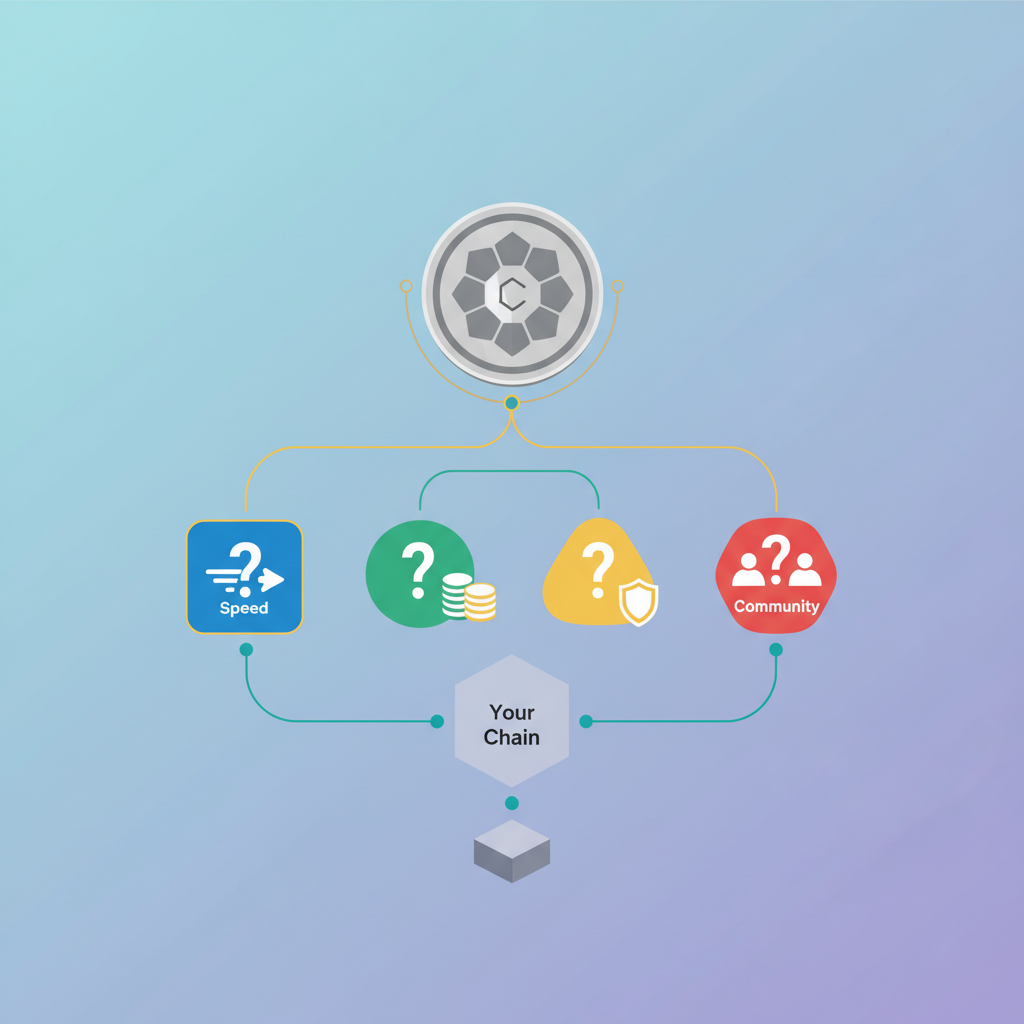
This is the part most "how to create a coin" tutorials skip. They pick Ethereum or Solana for you based on what tool they sell. Here's the actual routing logic.
The 4-Question Coin-Chain Decision Tree
-
Q1. Are your buyers crypto-native or first-time?
- First-time / no wallet → Base (Coinbase onboarding shortens the wallet-install friction). Skip Q2-Q4.
- Crypto-native (already holds SOL, ETH, or BNB) → continue to Q2.
-
Q2. Is your launch budget under $200?
- Yes → Solana. Mint + LP + burn lands at
5.5 SOL ($770 at SOL=$140) but tokens can be minted alone for0.07 SOL ($10). No other serious chain matches this floor. Skip Q3-Q4. - No → continue to Q3.
- Yes → Solana. Mint + LP + burn lands at
-
Q3. Do you need sub-second finality (memecoin launch, sniper-resistant pricing, fast retries)?
- Yes → Solana. Slot time is ~400ms; Ethereum's ~12s block time means a sniper can frontrun your LP-add transaction with confidence. Skip Q4.
- No → continue to Q4.
-
Q4. Is your launch mechanic bonding curve + viral distribution, or flat AMM launch with retained control?
- Bonding curve / viral → Solana via pump.fun, or BSC via four.meme. Both are bonding-curve launchpads with built-in chart audiences.
- Flat AMM, you want to keep authority decisions in your hands → Solana via Alchemii, Ethereum via standard ERC-20 + Uniswap V3, or BSC via standard BEP-20 + PancakeSwap V3.
The tree routes ~80% of new-launch reads to Solana, which is the honest answer in 2026. For the rest: Base for first-timers, Ethereum if you already have an Ethereum-native audience or treasury, BSC if your community is concentrated on BNB Chain. The remaining 20% are the interesting cases, and the tree picks for them too.
| Chain | Launch cost (mint + LP + burn) | Block time | Best for |
|---|---|---|---|
| Solana | ~400ms | Memecoins, fast launches, sub-$1k budgets | |
| Base | $40-$120 in gas | ~2s | First-time-buyer audiences via Coinbase |
| BSC | $30-$80 in gas | ~3s | BNB-native communities, bonding-curve launchpads |
| Ethereum mainnet | $400-$2,200 in gas | ~12s | Established treasuries, EVM-native audiences |
The 5-step create-a-coin path (works on any chain)
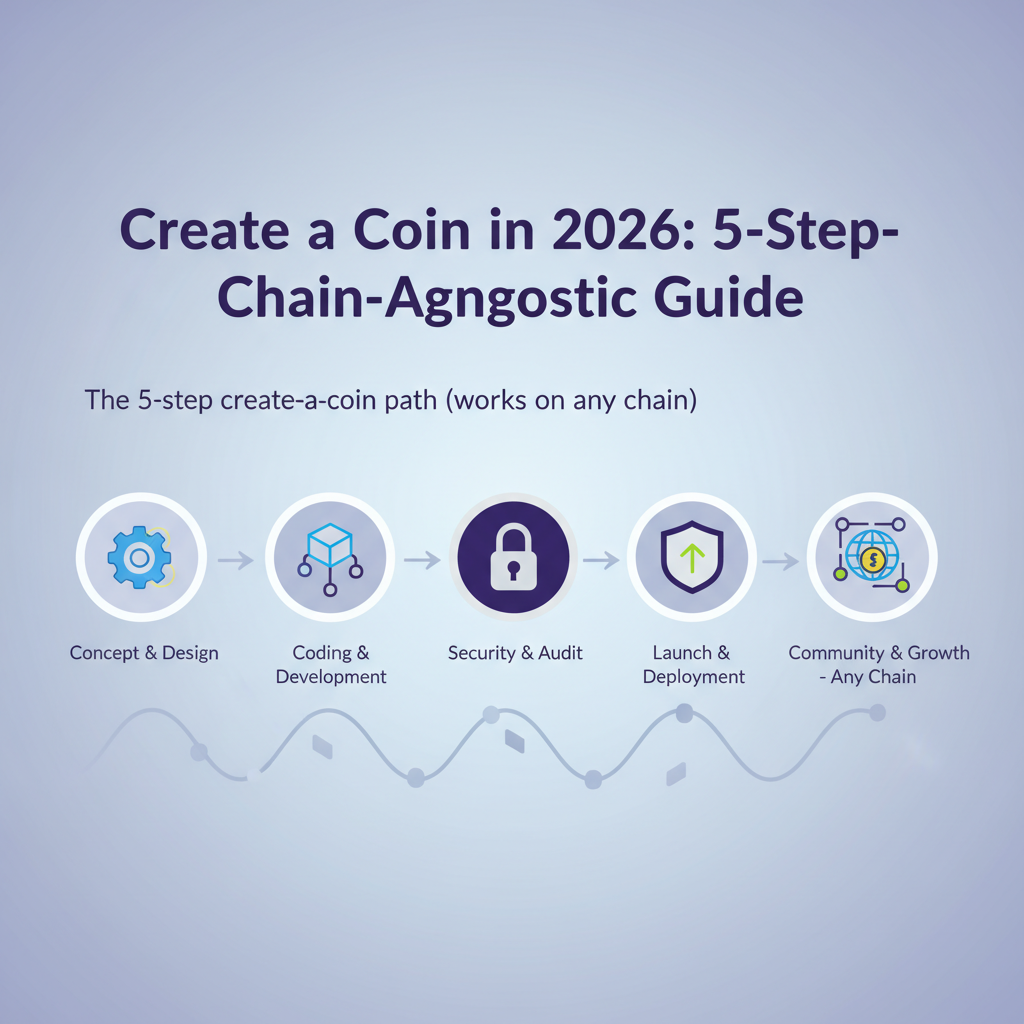
The mechanics are the same on every chain. The differences are which tool you click and what currency you pay fees in.
Step 1: Pick the chain (Q1-Q4 above) and fund the wallet.
For Solana, install Phantom and hold at least 0.1 SOL. That's enough to cover the 0.07 SOL mint and leave room for the LP step. For Ethereum/Base, install MetaMask and hold the native gas token (ETH on both). For BSC, MetaMask with BNB.
Step 2: Decide name, symbol, supply, decimals.
Standards differ. On Solana via Metaplex Token Metadata, name is capped at 32 characters and symbol at 10. Most ERC-20s follow the same convention by social norm rather than protocol. Supply is a marketing decision; modal memecoin supply is 1B. Decimals match the chain norm: USDC is 6 on Solana (same on Ethereum), BONK is 5, WIF is 6. Default to 6 unless you have a tokenomics reason to deviate. Image should be 512×512 PNG or SVG, under the 512KB metadata image cap that most wallets enforce.
Step 3: Mint the token.
On Solana, open Alchemii's Solana Token Creator, fill in the form, sign the transaction. On Ethereum/Base/BSC, deploy a vetted ERC-20/BEP-20 contract via Remix, OpenZeppelin Wizard, or a no-code launcher. Solana confirms in 1-2 seconds. Ethereum mainnet takes one block (~12s). The mint creates the token's address. Copy it before you close the tab.
Step 4: Add liquidity (and burn the LP).
This is the step that makes the token tradable. On Solana, add a Raydium pool by pairing your token with SOL or USDC at a starting price you choose. The LP tokens you receive represent ownership of the pool, and burning them is the universal "I won't rug" signal. Without an LP burn, holders assume worst case and trade accordingly.
Step 5: Revoke authorities.
Solana tokens have three authorities: mint (can print more supply), freeze (can lock holder accounts), update (can change name/image/metadata). For memecoins, revoke all three. For utility tokens with real inflation, keep mint authority. Actually, put it on a Squads multisig, not a single-key wallet. ERC-20s have analogous owner functions; OpenZeppelin's Ownable contract has a renounceOwnership() function that does the equivalent of "revoke all authorities" in one call.
That's it. Five steps. The whole sequence (including time to think about name and decimals) typically runs 5-15 minutes if you've done it once before, 30-60 if it's your first.
// 1. Connect wallet on the chosen chain
const wallet = await connectWallet({ chain: pickedChain });

// 2. Define token config
const config = {
  name: "ExampleCoin",       // ≤32 chars (Solana / Metaplex limit)
  symbol: "EXC",             // ≤10 chars
  decimals: 6,               // USDC parity
  supply: 1_000_000_000,     // 1B, modal memecoin supply
  imageUrl: "ipfs://...",    // 512×512, ≤512KB
};

// 3. Mint
const mintAddress = await createToken(wallet, config);

// 4. Add liquidity, then burn LP
const pool = await addLiquidity(mintAddress, "SOL", { initialPrice: 0.0001 });
await burnLpTokens(pool.lpToken);

// 5. Revoke authorities (memecoin default)
await revokeAuthorities(mintAddress, ["mint", "freeze", "update"]);
Cost, time, and tradeability: what to expect
Numbers, in order of how often I get asked about them. SOL pricing assumes ~$140; gas pricing for EVM chains varies by the hour.
| Chain | Mint only | + LP + burn (typical) | Time to "tradeable on a DEX" |
|---|---|---|---|
| Solana | 1-3 minutes | ||
| Base | $4-$15 gas | $40-$120 | 3-5 minutes |
| BSC | $3-$10 gas | $30-$80 | 3-5 minutes |
| Ethereum mainnet | $30-$200 gas | $400-$2,200 | 5-15 minutes |
A subtle thing nobody warns you about: minting is only half of being "live." On Solana, Phantom and similar wallets index new tokens through their own pipeline. Until your token clears that pipeline (typically ~30 days, sometimes faster if there's volume), it shows up as "Unknown" in some wallet UIs and may not be searchable by ticker. The same applies to the Jupiter strict-list. Jupiter gates which tokens appear in their default aggregator UI, and the strict-list onboarding window is also roughly 30 days post-launch.
This is the gap between "tradable on a DEX" (instant, the moment LP exists) and "visible everywhere" (weeks). Plan accordingly: if you're launching with a marketing push, factor a 1-4 week visibility ramp on top of the launch itself.
For the breakdown of where the SOL goes on a Solana launch, see the full cost breakdown of creating a Solana token. For the timing side, see how long it takes to create a Solana token. For a side-by-side with Ethereum mechanics, Solana token vs Ethereum ERC-20 walks through why the cost gap exists.
Pitfalls (read before you sign anything)
I've launched 47 tokens. The mistakes below are the ones I see weekly, and most are irreversible once you sign.
- Picking Ethereum because it's "the obvious choice." It hasn't been for a memecoin launch since ~2023. The gas alone is more than a full Solana launch including burned LP. Pick EVM only if you have an audience or treasury reason for it.
- Skipping the decimals conversation. Supply you enter is in whole tokens, but on-chain the protocol stores everything in the smallest indivisible unit (10^decimals × supply). A token with 1B supply at 6 decimals is actually 10^15 base units. Pick 6 unless you have a real reason to deviate, and verify on-chain before you share the address.
- Forgetting to burn the LP. Without it, every halfway-experienced trader looks at your pool, sees the LP tokens in your wallet, and assumes you can pull liquidity at any time. They're right. Burn or use a vesting contract; there's no middle ground holders trust.
- Revoking update authority before proofreading. I've watched founders revoke update authority with a typo in the ticker. It's permanent. Wait 24 hours and read it 3 times before you sign the revoke.
- Assuming "no code" means "no decisions." No-code tools handle the on-chain plumbing. They cannot make the supply, decimals, authority, and pricing decisions for you, and those are the choices that determine whether anyone wants to hold the token.
- Treating chain selection as immutable. It is. There's no migration path that doesn't involve a fresh launch on the new chain and asking holders to swap voluntarily, which most won't.
That last one is the meta-pitfall. The Q1-Q4 decision is the most consequential decision in this whole process. Spend 10 minutes on it, not 10 seconds.
Where these numbers come from
- Solana docs: Programs and the SPL Token Program: mint account model, account rent, fee structure.
- SPL Token Program reference:
TokenkegQfeZyiNwAJbNbGKPFXCWuBvf9Ss623VQ5DA, decimals semantics. - Metaplex Token Metadata docs: 32-char name limit, 10-char symbol limit, metadata account structure.
- Raydium docs: AMM V4 and CLMM: pool creation fees, LP token mechanics, burn pattern.
- Jupiter docs: strict-list onboarding: visibility window for new tokens in the default aggregator.
- Phantom Learn: token visibility: wallet indexing pipeline and the ~30-day window.
- Solscan: BONK token page: 100T supply, 5 decimals, all authorities revoked.
- Solscan: USDC on Solana: 6 decimals, the parity benchmark.
- Solana Explorer: independent indexer for cross-checking mint state post-launch.
- DexScreener: Solana feed: post-launch chart visibility for new Raydium / Orca pools.
- Birdeye: Solana token feed: holder histories and post-launch liquidity tracking.
- Solana Program Library on GitHub: source of truth for the SPL Token Program.
The honest summary: if you're reading this and you don't already know what chain you want, the answer is Solana, and the fastest path to a live tradeable token is the meme coin creator with the memecoin defaults pre-filled (1B supply, 6 decimals, all authorities revoked). If you want to see what a working sibling tool looks like, the token-maker overview walks through the same flow with screenshots.
Related Topics
More guides covering the same Solana token creation, mint authority, LP burn, Raydium liquidity, and memecoin launch topics.
Get Token Verified on DexScreener: The 2026 Guide
How to get your token verified on DexScreener — the orange checkmark, DEX Paid badge, and Boost mechanics explained. Costs, submission steps, and rejection reasons.
How to List a Token on DexScreener (Quick Guide 2026)
DexScreener auto-indexes any token with a live DEX pool — no manual submission. Learn how DexScreener listing works: prerequisites, timeline, next steps.
Transfer Mint Authority on Solana: Move vs Revoke
Transfer Solana SPL mint authority to a multisig instead of revoking — when each is right, SetAuthority mechanics, common pitfalls.
How to Airdrop Solana Tokens (Step-by-Step 2026)
Complete walkthrough for airdropping SPL tokens on Solana: wallet CSV prep, batch limits, cost per send, and when an airdrop helps vs. hurts your launch.
Solana Burn Wallet: What It Is, How to Verify
The Solana burn wallet (1nc1nerator) explained: what it is, why tokens sent there are gone forever, and how to verify any LP or supply burn on Solscan.
DexScreener Enhanced Token Info: How to Get It (2026)
How to get DexScreener Enhanced Token Info for your Solana token — paid path, manual review, metadata fields, and rejection reasons.