Is Meme Coin Trading Profitable? 2026 Data
Is meme coin trading profitable? We tracked 921 new pump.fun coins and 11,070 wallets: 20.5% made money, and creators beat traders 2 to 1. See the data.

Ready to create your Solana token? Enter your token details, choose your authority options, and confirm in your wallet.
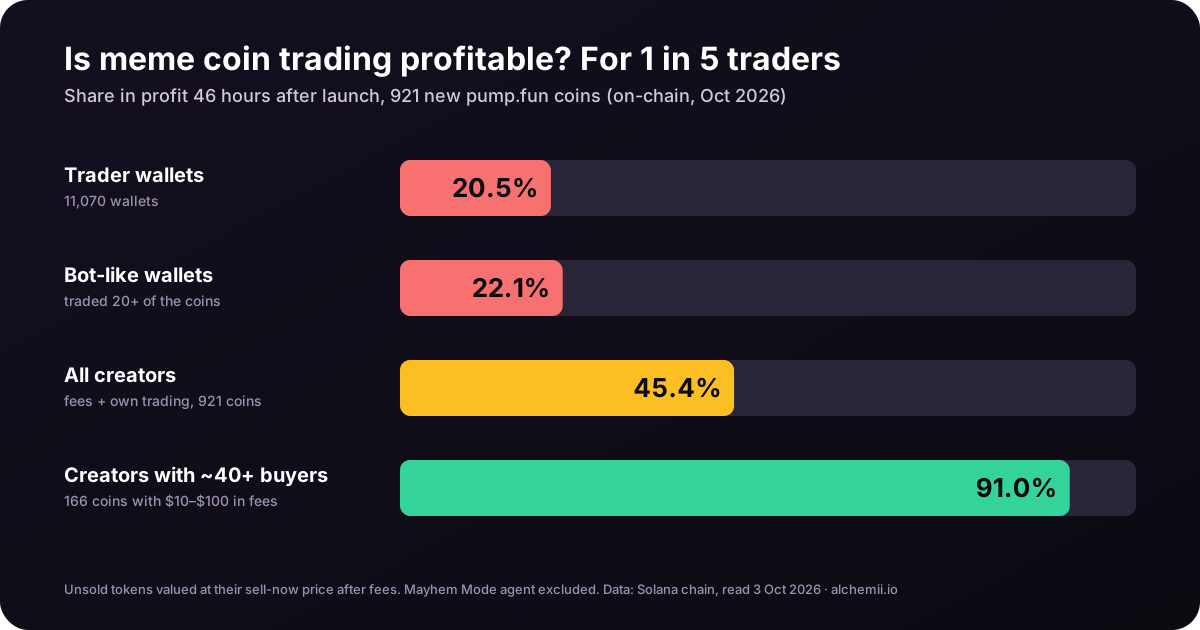
Is meme coin trading profitable? For most people, no. We followed the 921 SOL-paired coins that launched on pump.fun in 21 minutes on 1 October 2026 and checked every wallet that traded them 46 hours later. Only 20.5% of the 11,070 wallets were in profit, and the median wallet was down $6.83. The creators of those same coins did better: 45.4% ended in profit, because every buy and sell pays them a fee. So in the meme coin game, the creator side is the better seat. But it is not free money. The median creator roughly broke even, and the creators who profited were the ones who brought buyers.
Disclosure: Alchemii sells a meme coin creator, so we have a stake in the creator side. That is why every number below comes from public on-chain data or a named study, and the raw results file is linked at the end.
Quick facts: is meme coin trading profitable in 2026?
We tracked 921 new pump.fun coins: how many traders made money?
Most studies count a month of trading across all coins. We wanted the answer for the most common experience: buying a brand-new coin minutes after it launches. So we took one 21-minute slice of pump.fun launches and followed every coin and every wallet.
Here is the method in plain words:
- The coins. pump.fun listed 1,042 new coins between 20:40 and 21:01 UTC on 1 October 2026. 121 of them trade against something other than SOL, such as tokenized stocks, USDC or the PUMP token, so we left them out. That leaves 921 coins.
- The trades. On 3 October we read all 101,308 transactions that touched those coins' bonding curves (the automatic price formula every new pump.fun coin trades on), straight from the Solana chain.
- The result. For every wallet we added up the SOL it paid and received, including network fees and tips. Then we added what its unsold tokens would fetch if it sold them now, after fees. Creators' own wallets and pump.fun's Mayhem Mode trading bot are counted separately.
This is the result for the 11,070 wallets that traded at least one coin:
| Result after 46 hours | Trader wallets | Share |
|---|---|---|
| Lost more than $1,000 | 37 | 0.3% |
| Lost $500 to $1,000 | 50 | 0.5% |
| Lost $1 to $500 | 7,567 | 68.4% |
| About even (within $1) | 1,397 | 12.6% |
| Made $1 to $500 | 1,948 | 17.6% |
| Made $500 to $1,000 | 48 | 0.4% |
| Made more than $1,000 | 23 | 0.2% |
69.1% of wallets lost money, 12.6% ended about even, and 18.2% made money. Most of the action is small. The typical trader put in about $10 across these coins. Losing $1 to $500 was by far the most common result, and so was making $1 to $500 among the winners.
How much do meme coin traders make?
Usually a few dollars, up or down:
- The median wallet lost $6.83.
- A wallet at the 90th percentile made $19.58.
- A wallet at the 99th percentile made $367.
- The best wallet made 78.1 SOL (about $9,360). The worst lost 35.0 SOL.
Gains were very concentrated. All the winning wallets together made 1,690 SOL. The top 1% of wallets, 110 of them, took 49.7% of it. If you picture meme coin trading as a game where most people win a little, the data says the opposite: most people lose a little, and a few people win most of the prize.
Even the bots lost
The 1,042 coins in our sample launched within 21 minutes. A wallet that traded 20 or more of them was almost certainly automated. You might expect bots to win. They didn't:
| How many of these coins the wallet traded | Wallets | In profit | Median result | Group total |
|---|---|---|---|---|
| 1 coin (casual) | 6,938 | 21.0% | −$4.12 | −1,006.7 SOL |
| 2–4 coins | 3,433 | 18.5% | −$12.95 | −498.7 SOL |
| 5–19 coins | 586 | 26.5% | −$7.96 | +14.6 SOL |
| 20+ coins (bot-like) | 113 | 22.1% | −$21.42 | −57.2 SOL |
The bot-like group had the worst median result, −$21.42. Bots usually pay priority fees and tips on every trade, and those costs add up across dozens of coins. The only group that made money overall was the 5–19-coin group, and only 14.6 SOL across 586 wallets.
Are meme coins profitable? Three studies, three answers
If you search "are meme coins profitable" or "is trading meme coins profitable", you will find very different numbers. They come from counting different things.
| Study | Period | Wallets | Share in profit | What it counts |
|---|---|---|---|---|
| CoinGecko Research | April 2026 | 3.14M | 73.3% | Only coins traders sold (realized) |
| @oladee Dune dashboard (crypto.news) | March 2026 | ~1.4M | About 50% | Method not given in the report |
| Alchemii cohort (this article) | 1–3 Oct 2026 | 11,070 | 20.5% | Sold and unsold, newest coins only |
CoinGecko Research found 73.3% of pump.fun wallets in profit in April 2026. That sounds great, but read the method: it counts only realized profit, meaning coins people actually sold. A trader who bought a coin that went to zero and never sold it does not show up as a loser. CoinGecko says itself that this "understates losses." Its own tiers also show how small the wins were: 65.1% of all wallets made between $1 and $500, and 5.4% made over $1,000.
A Dune dashboard by @oladee, reported by crypto.news, found 49% to 50.6% of wallets lost money in March 2026, and only about 4% made more than $500.
Our study is the hardest test: brand-new coins only, unsold bags counted at what they would really fetch. That is why our 20.5% is lower.
The long-run picture is useful too. For two years, from April 2024 to the end of 2025, CoinGecko's own count never had more than 51.2% of wallets in profit, and it fell to 30.1% in June 2025. Before the jump to 70% in 2026, monthly active wallets fell from 5.2M in May 2025 to 1.8M in December 2025. CoinGecko's explanation is that losing traders left the platform. So "are meme coins still profitable?" Even on the friendliest count, a lot of the people who lost money are simply no longer trading.
Who makes money from meme coins? Follow the fees
The clearest answer to "who makes money from meme coins" is in the fee schedule. On the pump.fun bonding curve, every buy and every sell pays 1.25% (pump.fun): 0.95% to pump.fun and 0.30% to the coin's creator.
| A $100 trade on the pump.fun curve | Trader pays | pump.fun gets | Creator gets |
|---|---|---|---|
| Buy | $1.25 | $0.95 | $0.30 |
| Sell | $1.25 | $0.95 | $0.30 |
| Round trip (buy, then sell) | $2.50 | $1.90 | $0.60 |
| 10 round trips | $25.00 | $19.00 | $6.00 |
A trader has to be right about the price and beat 2.5% per round trip. The platform and the creator are paid on every trade, win or lose. Here is how that played out in our 921 coins:
| Where the money went (46 hours, 921 coins) | SOL | USD |
|---|---|---|
| Traded on the bonding curves | 32,060 | $3.84M |
| Fees kept by pump.fun (protocol) | 295.4 | $35,400 |
| Fees paid to coin creators | 93.3 | $11,200 |
| Traders' combined result | −1,548.0 | −$185,500 |
| All traders' gains added up | +1,690.0 | +$202,500 |
| All traders' losses added up | −3,238.0 | −$387,900 |
| Share of gains taken by the top 1% of wallets | 49.7% | 110 wallets |
In 46 hours, traders moved 32,060 SOL through these coins' curves. pump.fun kept 295.4 SOL and creators collected 93.3 SOL in fees. Traders as a group ended 1,548 SOL down: 3,238 SOL of losses against 1,690 SOL of gains. That is the core of meme coin trading: a game that charges every player on every move, where most of the winnings go to a few.
Is creating a meme coin more profitable than trading one?
This is the question we really wanted to answer. Creators of the same 921 coins were measured the same way: their creator fees, plus the result of their own buying and selling of their coin.
Creators were in profit 45.4% of the time, against 20.5% for traders. They were also more than three times as likely to make over $500: 2.2% of creators against 0.64% of trader wallets. On every measure, the creator side of meme coins did better.
Now the honest part, because it matters:
- The median creator roughly broke even, at −$0.81. The median creator fee was $1.01. Most coins never got enough trading to pay their creator much.
- 129 coins (14%) had no outside trader at all. Nobody but the creator ever touched them.
- Buying your own coin barely changed the odds. The 787 creators who bought some of their own coin were in profit 46.1% of the time. The 134 who never did: 41.0%.
One creator is a special case. They bought out their own curve with an 85 SOL purchase at launch, and the coin now trades at a $66M market cap on PumpSwap. We count them in the shares above, but we leave them out of group totals, because one paper gain of about 2,960 SOL would swamp everything else.
So what separated the creators who won? One thing: buyers.
| Creator fee earned in 46 hours | Coins | Median outside buyers | Creators in profit |
|---|---|---|---|
| $0 | 41 | 0 | 0% |
| Under $1 | 416 | 1 | 21.4% |
| $1 to $10 | 272 | 8 | 56.6% |
| $10 to $100 | 166 | 42 | 91.0% |
| Over $100 | 26 | 256 | 92.3% |
Read the table from top to bottom. Creators with one outside buyer or none were in profit 21% of the time, about the same as traders. Creators whose coin drew around 8 buyers: 57%. Around 42 buyers: 91%. Around 256 buyers: 92%. Fees add up with trading volume, and volume comes from people. That is the real answer to "is creating a meme coin profitable": yes, if you can bring a crowd. Without one, it is a $1 lottery ticket like everything else.
Creating vs trading meme coins, side by side
| Trading a new meme coin | Creating a meme coin | |
|---|---|---|
| How you make money | The price must go up after you buy | Fees on every trade, up or down, plus your own tokens |
| In profit after 46 hours (our data) | 20.5% of wallets | 45.4% of creators |
| Median result | −$6.83 per wallet | −$0.81 per creator |
| Made over $500 | 0.64% | 2.2% |
| What decides it | Timing and luck | How many buyers you bring |
| Cost to start on pump.fun | Your trade size + 2.5% per round trip | $0 to create; most add a first buy |
How to be on the creator side
If the creator seat is the better seat, the question is how to sit in it well. Four rules from the data:
- Bring buyers before you launch. The 91% group had around 40 outside wallets. That is a small group chat, an X following or a community that already likes the meme. Our guide on how to market a Solana memecoin covers free ways to build one.
- Pick where the fees go. On pump.fun, creators earn 0.30% on the curve and up to 0.95% after graduation; we broke down the full schedule in how to make money on pump.fun. If you launch your own token and pool instead, the pool's LP fee goes to whoever holds the LP tokens (the receipt for the liquidity you put in), and that is you.
- Keep your first buy small, and never dump on your own buyers. Leaving out the one outlier above, creators' own trading in our sample lost 392 SOL as a group. The creators who won did it through fees and real demand, not by selling their supply into the first buyers.
- Treat each launch as one shot. The median coin earns about a dollar. Plan the meme, the launch time and the first hour of promotion as one project, as we lay out in the Solana memecoin launch checklist.
If you want to try the own-pool route, you can create a meme coin with Alchemii in one transaction for about 0.22 SOL, then open your pool with the create liquidity tool and keep the LP.
Is meme coin trading gambling?
It looks a lot like it. Most results are small losses. A few are big wins. And the house takes a cut of every bet. pump.fun even runs a feature called Mayhem Mode (pump.fun), where an AI agent buys and sells new coins "with equal probabilities in a random walk" for their first 24 hours to add volume. We left that agent out of our numbers. The one big difference from a casino is that on a meme coin, the person who created the game also earns from every bet. That is why we think the creator side is the more interesting place to be.
Limitations
- One slice of time. Our cohort is 21 minutes of launches on one evening, measured after 46 hours. A busier week or a longer wait would change the numbers.
- Curve phase only. 29 coins graduated, meaning they filled their curve and moved to PumpSwap, pump.fun's regular exchange. We did not read their trading after that; unsold tokens are valued at the live pool price instead. Creator fees earned on PumpSwap are also not counted, so the best creators did a bit better than shown.
- Wallets, not people. One person can run many wallets, and a creator can buy their own coin from a second wallet. We cannot see that.
- Unsold tokens are marked at a sell-now price. Prices of new coins move fast, so these values are a snapshot.
- 121 custom-pair coins left out. They trade against tokens other than SOL, so their results need a different method.
Summary
- Is meme coin trading profitable? For 20.5% of wallets in our sample of 921 new pump.fun coins. The median wallet lost $6.83 in 46 hours.
- Big wins are rare and concentrated: 0.64% of wallets made over $500, and the top 1% took half of all gains.
- Other studies show higher numbers (73% at CoinGecko) because they count only coins that were sold.
- Creators did better on every measure: 45.4% in profit, 2.2% over $500. But the median creator broke even.
- Buyers decide it. Creators with around 40 outside buyers were in profit 91% of the time.
To get on the fee side yourself, create your meme coin and plan the buyers first. For the deeper creator playbook, read how meme coin creators make money, and if you do trade, set your exit rules before you buy.
FAQ
Is meme coin trading profitable?
For most people, no. We followed 921 new pump.fun coins for 46 hours and found that only 20.5% of the 11,070 wallets that traded them were in profit. The median wallet was down $6.83, and just 23 wallets made more than $1,000. CoinGecko found a much higher 73% in April 2026, but it counted only coins people had sold, which leaves out everyone still holding a losing coin.
What percentage of meme coin traders lose money?
In our October 2026 sample of brand-new pump.fun coins, 69.1% of trader wallets lost more than $1 and another 12.6% ended within $1 of even. A Dune dashboard reported by crypto.news found 49% to 50.6% of pump.fun wallets lost money in March 2026, and CoinGecko's realized-only count put losers at 26.7% in April. The newer the coins and the more unsold bags you count, the higher the share.
How much do meme coin traders make?
Usually a few dollars either way. In our sample the median wallet lost $6.83, the wallet at the 90th percentile made $19.58, and the one at the 99th percentile made $367. Only 0.64% of wallets made over $500. The gains were concentrated: the top 1% of wallets took 49.7% of all the profit that anyone made.
Why do studies disagree on how many pump.fun traders are profitable?
Because they count different things. CoinGecko Research counted only realized profit, the coins people actually sold, and found 73.3% of wallets in profit in April 2026; its own report says that understates losses. Our study also counts tokens people still hold, valued at what they would fetch if sold now, and looks only at brand-new coins 46 hours after launch. That gives 20.5%.
Who makes the most money from meme coins?
The platform, then creators with buyers, then a small group of traders. In our 921 coins, pump.fun took 295.4 SOL in protocol fees and creators took 93.3 SOL in creator fees on 32,060 SOL of trading, while traders as a group lost 1,548 SOL. Among traders, the top 1% of wallets took half of all the gains.
Who earned more in your pump.fun data, creators or traders?
Creators. 45.4% of the 921 creators ended in profit, counting their creator fees and their own trading, against 20.5% of trader wallets. 2.2% of creators made over $500, against 0.64% of traders. But the median creator roughly broke even at −$0.81. The creators who profited had buyers: 91% of those whose coin drew about 40 outside wallets were in profit.
How much money do you need to start trading meme coins?
Technically very little: the median wallet in our sample put in about $10. But fees make small trades expensive. Pump.fun charges 1.25% on every buy and every sell, so a round trip costs 2.5% before network fees and priority tips. Only trade money you can afford to lose completely, because 69% of the wallets we tracked lost some.
Is meme coin trading gambling?
It behaves like it. Most outcomes are small losses, a few are large wins, and the house takes a cut of every bet: 1.25% per trade on pump.fun. Even wallets that traded 20 or more coins in 21 minutes, which are almost certainly bots, lost a median $21.42. The difference from a casino is that the coin's creator also earns a share of every trade.
References
Sources
- Pump.fun Traders Are Making a Comeback — CoinGecko Research (accessed 2026-10-03)
- Pump.fun data shows 49% of March traders in the red as platform locks fees — crypto.news (accessed 2026-10-03)
- Pump.fun fees (pump.fun/docs/fees) — pump.fun (accessed 2026-10-03)
- Mayhem Mode (pump.fun/docs/mayhem-mode) — pump.fun (accessed 2026-10-03)
- Pump.fun — Wikipedia (accessed 2026-10-03)
- Pump.fun fees and revenue — DefiLlama (accessed 2026-10-03)
- SOL price — CoinGecko (accessed 2026-10-03)
- Graduated-coin pool reserves — DexScreener API (accessed 2026-10-03)
- Cohort results: wallet tiers, creator fees, method (raw) — AlchemiiOur own on-chain reads, 3 Oct 2026
Create your Solana token
Choose your token name, symbol, supply and image. Review the authority options and creation fee, then confirm the transaction in your wallet. Liquidity is a separate step.
Related Topics
More guides to Solana token creation, authorities, liquidity, and meme coin launches.
How to Make Money on Pump.fun: Creator Rewards
How to make money on pump.fun by creating a coin: creator rewards pay 0.30% to 0.95% of every trade. See Sept 2026 payouts, Holder Rewards, and how to withdraw.
Meme Coin Market Cap 2026: $36B by Coin & Chain
The meme coin market cap is $36.45B, 76% below its record, yet launchpad fees just hit $10.3M a day. See the data by coin and chain, then launch your own.
How Many Meme Coins Are Created Every Day? 35,700+ (2026)
We counted 1,048 Solana launches in 42 minutes — a new meme coin every 2.4 seconds, about 35,705 a day. Who makes them, what they earn, and what we got wrong.
Crypto FOMO in Memecoins: The Price of Waiting for Proof
Crypto FOMO has a price you can calculate. The median pump.fun winner graduates in 4.4 minutes — and $2,210 of buying takes 56% of the cheap supply.
Solana Memecoin Narrative Clusters: How Theme Waves Form (2026)
Seven of nine cards on one live pump.fun board were one narrative. How memecoin theme waves form, what a cluster's cap curve means, and when it's spent.
How Do Meme Coin Creators Make Money? 4 Real Ways (2026)
How meme coin creators can make money through creator fees, Raydium LP fee share, disclosed allocation, and appreciation — with current 2026 fee math.